Mostrando las entradas con la etiqueta Ginsberg. Mostrar todas las entradas

martes, febrero 07, 2023

Nuestra propia ciudad interior, radiante y subjetiva. Escritores en Machu Pichu. Ginsberg, Allende, Borges, Neruda


NUESTRA PROPIA CIUDAD INTERIOR, RADIANTE Y SUBJETIVA. Palabras del escritor Jorge Hernán Calvo Rojas, presentación de Escritores en Machu Pichu. Crónicas de viaje de Pérez Santiago.

Buenas tardes:
Nos convoca en esta oportunidad el nacimiento o la aparición de un nuevo libro de mi amigo el escritor Omar Pérez Santiago “Escritores en Machu Pichu”. Ya, desde el título apunta o señala que se trata de un viaje, pero como tantos viajes su destino son distintos puertos de llegada.
Hoy se piensa que la ciudad de Machu Pichu fue construida alrededor de 1450, por orden del emperador Pachacutec en el Valle sagrado de los Incas y su nombre era Vilcabamba; fue un importante centro urbano y religioso, habitado por una población de entre 300 y 1000 habitantes. Ha sido declarada Patrimonio de la Humanidad en 1983, por la Unesco. “Además de la extraordinaria belleza de su emplazamiento, Machu Picchu es probablemente la más lograda realización arquitectónica del periodo de apogeo del Imperio Inca.”
El título también alude a escritores en Machu Pichu y los escritores son cuatro; Borges, Neruda, Ginsberg e Isabel Allende. Entonces lo que se nos propone es una mirada a Machu Pichu desde la perspectiva de estos escritores y eso significa una mirada, aunque solo se trate de un vistazo, al tipo de vínculo que estos escritores pudieron tener con una ciudad que luego de 400 años de estar oculta emergió de golpe en nuestra época.
Como bien se sabe las ciudades reales o imaginarias juegan un papel central en la ficción borgeana, a partir de ese cuento notable que es Tlön Uqbar Orbis Tertius. Tlön propuesto por Borges es un mundo ilusorio que a su vez tiene regiones imaginarias en las que los habitantes de Uqbar basan sus leyendas. El narrador le atribuye a Johannes Valentinus Andreä la descripción de una comunidad imaginaria… Borges despliega una visión poética de lo fantástico. Quizá con el único propósito de demostrar que: “la metafísica es una rama de la literatura fantástica”. Meta relatos, espejos y mundos posibles. Los cuentos de Borges se sostienen a menudo en notas al margen o al pie de página señalando como referente algún pasaje de la Enciclopedia británica. Atención, nada de esto existe, el gran mérito de Borges, crear una realidad imaginaria para sostener otra realidad imaginaria, un espejo de ilusiones o un laberinto. La verdadera fascinación de Borges son los laberintos y en especial los laberintos temporales.
Y en cierto modo estos laberintos, que crea y recorre Borges, actúan a su vez como un poderoso imán que atrae a otros peregrinos de la literatura y les ofrece tours a ciudades reales o imaginarias donde acechan fantasmas de viejas historias.
Tuve oportunidad de conocer a Omar Perez Santiago, entonces bajo el apodo de Pancho, precisamente al final de un largo viaje que me llevó desde esta ciudad al pie de la Cordillera de los Andes, cruzando el Atlántico al aeropuerto de Kastrup en Dinamarca y luego cruzando el estrecho de Oresund a la casa de un amigo común, el escritor sueco Fredrik Ekelund, en cuya casa aquella noche conocí a Pancho. Nació una amistad en torno a la literatura y a menudo nos reunimos a conversar en el Café Siesta: De este modo me enteré con el andar del tiempo de su interés por Jorge Luis Borges, ese gigante literario del siglo XX, un escritor al que Pancho observa detenidamente y analiza con verdadera vocación y de vez en cuando le pega algún coscacho. Entonces Pancho había escrito un cuento La Novia de Borges, este cuento luego se convirtió en guión, se adaptó al cine y muy pronto junto a una alegre troupe de actores, camarógrafos y gente de cine se fueron a Budapest a rodar una película. Después, con el correr del tiempo Pancho se ha ido tras los pasos de Borges en otros lugares, en Buenos Aires de todas maneras, pero ojo, también en Suiza, en la ciudad de Ginebra, sus pasos lo condujeron al mismo Cimitiere de Rois, campo santo donde en la cripta cifrada con el número 735 descansan los restos de Borges.
Piedra en la Piedra
¿El hombre dónde estuvo?
Luego tenemos dos poetas que también imaginaron o jugaron a fabular que habían subido -al igual que los antiguos incas- aquellas escalinatas de piedra. Ginsberg el del Aullido y Pablo Neruda que incorpora Las alturas de Machu Pichu a su Canto General, un poema, al que después Los Jaibas pusieron música: Neruda en sus versos ve lo efímero de la vida donde el proceso de nacer y morir constituye una belleza natural.
De Isabel Allende nos habla brevemente de su infancia en Lima pero luego se refiere a su novela Ines de Suarez y el viaje, la travesía, acompañando a Don Pedro de Valdivia desde el Cusco a Chile.
En un reciente libro de fotografías sobre Machu Pichu, con poemas de Neruda, Isabel Allende ve la ciudad como un lugar espiritual, donde aún se percibe el hálito de la magia.
Viajamos a través de espacios y a través de seres y vivencias, nos asomamos como turistas a obsesiones y fantasías y así va naciendo nuestra propia ciudad interior, radiante y subjetiva.
Jorge Calvo, escritor.

sábado, octubre 15, 2022

Allen Ginsberg visits Machu Picchu. Escritores en Machu Picchu


Allen Ginsberg visits Machu Picchu

CULTURE/ENGLISH. OPULENS
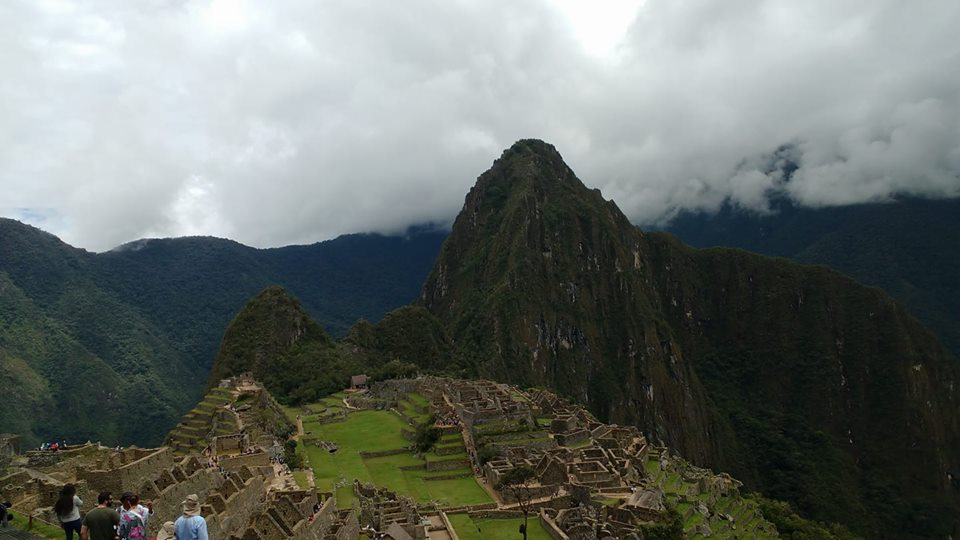
Machu Picchu (Foto: Omar Perez)

EXPERIENCE. On January 20th 1960, Allen Ginsberg flew from New York and landed at the Los Cerrillo’s airfield in Santiago. The poet was bearded and short-sighted, had dark eyes with optical lenses and carried a backpack. Ginsberg told reporters ‘I’m here to have fun’, but the next day a newspaper would write, perhaps maliciously: ‘I’m here to fuck one’.

Allen Ginsberg published his book Howl in 1957. Its impact on the literary world was like that of a cluster bomb. Chilean poet Gonzalo Rojas sent him an invitation to participate in a meeting organised by the Universidad de Concepción in 1960.
He stayed at the Pan-American hotel on Teatinos Street, next to the presidential palace La Moneda. He went to Café Il Bosco, the bustling bohemian centre in Alameda. Il Bosco was full of journalists, writers, night owls, cabaret performers, comedians and nightclubs dancers.

The following day a skinny man, only 25 years old, appeared at the entrance of the hotel. It was the poet Jorge Tellier. He did an interview which he published in Ultramar magazine. Ginsberg travelled in a van to Los Cerrillos where a plane took him to Concepción. The ‘First meeting of American writers’ was held between January 20th and 25th.

On April 21st Allen Ginsberg arrived in Cusco. He spent five days in the city. Then he went to the Machu Picchu area where a guard offered him accommodation in his hut. From there he wrote to his boyfriend, Peter, describing the cliffs and snow-capped mountains of the Andes. Ginsberg did not find what he was looking for: the sacred plant of the Incas – Ayahuasca, the rope of the dead.


Ginsberg stayed at the City Hotel, famous for its parties, boîte and elegant rooms. On January 21st he reads Howl in the auditorium of the University. In a letter he sent to his lover Peter Orlovsky he writes that the central discussion was about the relationship between art and politics. ‘Everyone expects the revolution.’ He wrote about the poet Luis Oyarzún, whom he described as a ‘roly-poly philosopher’, member of a semi-secret queer society. The writer Luis Oyarzún was then 40 years old. In 1954 he had been president of the Society of Writers. He also meets the Peruvian writer, Sebastián Salazar Bondy, director of the Institute of Contemporary Art of Lima. He invited him to Lima.

Global Twitter

Follow Opulens Global on Twitter 


In the early morning of January 26th, Ginsberg and his backpack got on the train that would take him further south. He wandered the wet streets of the cities of southern Chile; Temuco and Puerto Montt. Then he returned to Santiago and met the famous poets, Nicanor Parra, Jorge Teillier and Pablo de Rokha. He spent three months in Chile. In April he went to La Paz, the capital of Bolivia, writing:

”How real is Bolivia? With its snowy Andes rising above the modern city, now that one is in La Paz, which means The Peace in Spanish.”

On April 21st Allen Ginsberg arrived in Cusco. He spent five days in the city. Then he went to the Machu Picchu area where a guard offered him accommodation in his hut. From there he wrote to his boyfriend, Peter, describing the cliffs and snow-capped mountains of the Andes. Ginsberg did not find what he was looking for: the sacred plant of the Incas – Ayahuasca, the rope of the dead.

On May 5th Ginsberg went to Lima by bus. He stayed at the legendary Hotel Comercio, in front of the Desamparados Railway Station. The hotel has a famous bar on the ground floor, the Cordano bar. As in Il Bosco de Santiago, pisco sours were famous in the Cordano bar. Ginsberg reads Howl in a tiny room of the Institute of Contemporary Art, steps away from San Martin Square, on May 12th, 1960.
Ginsberg hiked in the Peruvian Amazon jungle through Huánuco to Pucallpa. Pucallpa reminded him in some city of Tibet. There he drank the hallucinogenic ayahuasca. In a letter sent to Burroughs Allen Ginsberg described his experience in these terms:

‘Drank a cup -slightly old stuff, several old and slightly fermented also- lay back and after an hour (in a bamboo hut outside his shack, where the shaman cooks) began seeing or feeling what I thought was a Great Being or a lake that approaching my mind like a great wet vagina was.’

On July 8th, 1960, Ginsberg departed from Lima airport back to New York.


OMAR PÉREZ SANTIAGO
info@opulens.se

Borges Visits Machu Picchu
Neruda visits Machu Picchu


domingo, agosto 09, 2020

Allen Ginsberg visits Machu Picchu. By Pérez Santiago


XPERIENCE. On January 20th 1960, Allen Ginsberg flew from New York and landed at the Los Cerrillo’s airfield in Santiago. The poet was bearded and short-sighted, had dark eyes with optical lenses and carried a backpack. Ginsberg told reporters ‘I’m here to have fun’, but the next day a newspaper would write, perhaps maliciously: ‘I’m here to fuck one’.

Allen Ginsberg published his book Howl in 1957. Its impact on the literary world was like that of a cluster bomb. Chilean poet Gonzalo Rojas sent him an invitation to participate in a meeting organised by the Universidad de Concepción in 1960.
He stayed at the Pan-American hotel on Teatinos Street, next to the presidential palace La Moneda. He went to Café Il Bosco, the bustling bohemian centre in Alameda. Il Bosco was full of journalists, writers, night owls, cabaret performers, comedians and nightclubs dancers.

The following day a skinny man, only 25 years old, appeared at the entrance of the hotel. It was the poet Jorge Tellier. He did an interview which he published in Ultramar magazine. Ginsberg travelled in a van to Los Cerrillos where a plane took him to Concepción. The ‘First meeting of American writers’ was held between January 20th and 25th.

On April 21st Allen Ginsberg arrived in Cusco. He spent five days in the city. Then he went to the Machu Picchu area where a guard offered him accommodation in his hut. From there he wrote to his boyfriend, Peter, describing the cliffs and snow-capped mountains of the Andes. Ginsberg did not find what he was looking for: the sacred plant of the Incas – Ayahuasca, the rope of the dead.


Ginsberg stayed at the City Hotel, famous for its parties, boîte and elegant rooms. On January 21st he reads Howl in the auditorium of the University. In a letter he sent to his lover Peter Orlovsky he writes that the central discussion was about the relationship between art and politics. ‘Everyone expects the revolution.’ He wrote about the poet Luis Oyarzún, whom he described as a ‘roly-poly philosopher’, member of a semi-secret queer society. The writer Luis Oyarzún was then 40 years old. In 1954 he had been president of the Society of Writers. He also meets the Peruvian writer, Sebastián Salazar Bondy, director of the Institute of Contemporary Art of Lima. He invited him to Lima.

In the early morning of January 26th, Ginsberg and his backpack got on the train that would take him further south. He wandered the wet streets of the cities of southern Chile; Temuco and Puerto Montt. Then he returned to Santiago and met the famous poets, Nicanor Parra, Jorge Teillier and Pablo de Rokha. He spent three months in Chile. In April he went to La Paz, the capital of Bolivia, writing:

”How real is Bolivia? With its snowy Andes rising above the modern city, now that one is in La Paz, which means The Peace in Spanish.”

On April 21st Allen Ginsberg arrived in Cusco. He spent five days in the city. Then he went to the Machu Picchu area where a guard offered him accommodation in his hut. From there he wrote to his boyfriend, Peter, describing the cliffs and snow-capped mountains of the Andes. Ginsberg did not find what he was looking for: the sacred plant of the Incas – Ayahuasca, the rope of the dead.

On May 5th Ginsberg went to Lima by bus. He stayed at the legendary Hotel Comercio, in front of the Desamparados Railway Station. The hotel has a famous bar on the ground floor, the Cordano bar. As in Il Bosco de Santiago, pisco sours were famous in the Cordano bar. Ginsberg reads Howl in a tiny room of the Institute of Contemporary Art, steps away from San Martin Square, on May 12th, 1960.
Ginsberg hiked in the Peruvian Amazon jungle through Huánuco to Pucallpa. Pucallpa reminded him in some city of Tibet. There he drank the hallucinogenic ayahuasca. In a letter sent to Burroughs Allen Ginsberg described his experience in these terms:

‘Drank a cup -slightly old stuff, several old and slightly fermented also- lay back and after an hour (in a bamboo hut outside his shack, where the shaman cooks) began seeing or feeling what I thought was a Great Being or a lake that approaching my mind like a great wet vagina was.’

On July 8th, 1960, Ginsberg departed from Lima airport back to New York.


PÉREZ SANTIAGO
info@opulens.se

sábado, abril 06, 2013

NO a la persecución en Arica del escritor Daniel Rojas Pachas.


El escritor Daniel Rojas Pachas, y editor de Cinosargo,  está enfrentando una abusiva y masiva campaña de persecución y destrucción de su honra en la ciudad de Arica. ¿La razones? Que en unos talleres literarios se hayan colados unos poemas del poeta beat, Allen Ginsberg

Saludo de Patricio Manns