Mostrando las entradas con la etiqueta Machu Pichu. Mostrar todas las entradas

martes, febrero 07, 2023

Nuestra propia ciudad interior, radiante y subjetiva. Escritores en Machu Pichu. Ginsberg, Allende, Borges, Neruda


NUESTRA PROPIA CIUDAD INTERIOR, RADIANTE Y SUBJETIVA. Palabras del escritor Jorge Hernán Calvo Rojas, presentación de Escritores en Machu Pichu. Crónicas de viaje de Pérez Santiago.

Buenas tardes:
Nos convoca en esta oportunidad el nacimiento o la aparición de un nuevo libro de mi amigo el escritor Omar Pérez Santiago “Escritores en Machu Pichu”. Ya, desde el título apunta o señala que se trata de un viaje, pero como tantos viajes su destino son distintos puertos de llegada.
Hoy se piensa que la ciudad de Machu Pichu fue construida alrededor de 1450, por orden del emperador Pachacutec en el Valle sagrado de los Incas y su nombre era Vilcabamba; fue un importante centro urbano y religioso, habitado por una población de entre 300 y 1000 habitantes. Ha sido declarada Patrimonio de la Humanidad en 1983, por la Unesco. “Además de la extraordinaria belleza de su emplazamiento, Machu Picchu es probablemente la más lograda realización arquitectónica del periodo de apogeo del Imperio Inca.”
El título también alude a escritores en Machu Pichu y los escritores son cuatro; Borges, Neruda, Ginsberg e Isabel Allende. Entonces lo que se nos propone es una mirada a Machu Pichu desde la perspectiva de estos escritores y eso significa una mirada, aunque solo se trate de un vistazo, al tipo de vínculo que estos escritores pudieron tener con una ciudad que luego de 400 años de estar oculta emergió de golpe en nuestra época.
Como bien se sabe las ciudades reales o imaginarias juegan un papel central en la ficción borgeana, a partir de ese cuento notable que es Tlön Uqbar Orbis Tertius. Tlön propuesto por Borges es un mundo ilusorio que a su vez tiene regiones imaginarias en las que los habitantes de Uqbar basan sus leyendas. El narrador le atribuye a Johannes Valentinus Andreä la descripción de una comunidad imaginaria… Borges despliega una visión poética de lo fantástico. Quizá con el único propósito de demostrar que: “la metafísica es una rama de la literatura fantástica”. Meta relatos, espejos y mundos posibles. Los cuentos de Borges se sostienen a menudo en notas al margen o al pie de página señalando como referente algún pasaje de la Enciclopedia británica. Atención, nada de esto existe, el gran mérito de Borges, crear una realidad imaginaria para sostener otra realidad imaginaria, un espejo de ilusiones o un laberinto. La verdadera fascinación de Borges son los laberintos y en especial los laberintos temporales.
Y en cierto modo estos laberintos, que crea y recorre Borges, actúan a su vez como un poderoso imán que atrae a otros peregrinos de la literatura y les ofrece tours a ciudades reales o imaginarias donde acechan fantasmas de viejas historias.
Tuve oportunidad de conocer a Omar Perez Santiago, entonces bajo el apodo de Pancho, precisamente al final de un largo viaje que me llevó desde esta ciudad al pie de la Cordillera de los Andes, cruzando el Atlántico al aeropuerto de Kastrup en Dinamarca y luego cruzando el estrecho de Oresund a la casa de un amigo común, el escritor sueco Fredrik Ekelund, en cuya casa aquella noche conocí a Pancho. Nació una amistad en torno a la literatura y a menudo nos reunimos a conversar en el Café Siesta: De este modo me enteré con el andar del tiempo de su interés por Jorge Luis Borges, ese gigante literario del siglo XX, un escritor al que Pancho observa detenidamente y analiza con verdadera vocación y de vez en cuando le pega algún coscacho. Entonces Pancho había escrito un cuento La Novia de Borges, este cuento luego se convirtió en guión, se adaptó al cine y muy pronto junto a una alegre troupe de actores, camarógrafos y gente de cine se fueron a Budapest a rodar una película. Después, con el correr del tiempo Pancho se ha ido tras los pasos de Borges en otros lugares, en Buenos Aires de todas maneras, pero ojo, también en Suiza, en la ciudad de Ginebra, sus pasos lo condujeron al mismo Cimitiere de Rois, campo santo donde en la cripta cifrada con el número 735 descansan los restos de Borges.
Piedra en la Piedra
¿El hombre dónde estuvo?
Luego tenemos dos poetas que también imaginaron o jugaron a fabular que habían subido -al igual que los antiguos incas- aquellas escalinatas de piedra. Ginsberg el del Aullido y Pablo Neruda que incorpora Las alturas de Machu Pichu a su Canto General, un poema, al que después Los Jaibas pusieron música: Neruda en sus versos ve lo efímero de la vida donde el proceso de nacer y morir constituye una belleza natural.
De Isabel Allende nos habla brevemente de su infancia en Lima pero luego se refiere a su novela Ines de Suarez y el viaje, la travesía, acompañando a Don Pedro de Valdivia desde el Cusco a Chile.
En un reciente libro de fotografías sobre Machu Pichu, con poemas de Neruda, Isabel Allende ve la ciudad como un lugar espiritual, donde aún se percibe el hálito de la magia.
Viajamos a través de espacios y a través de seres y vivencias, nos asomamos como turistas a obsesiones y fantasías y así va naciendo nuestra propia ciudad interior, radiante y subjetiva.
Jorge Calvo, escritor.

domingo, agosto 09, 2020

Pablo Neruda visits Machu Picchu. By Pérez Santiago


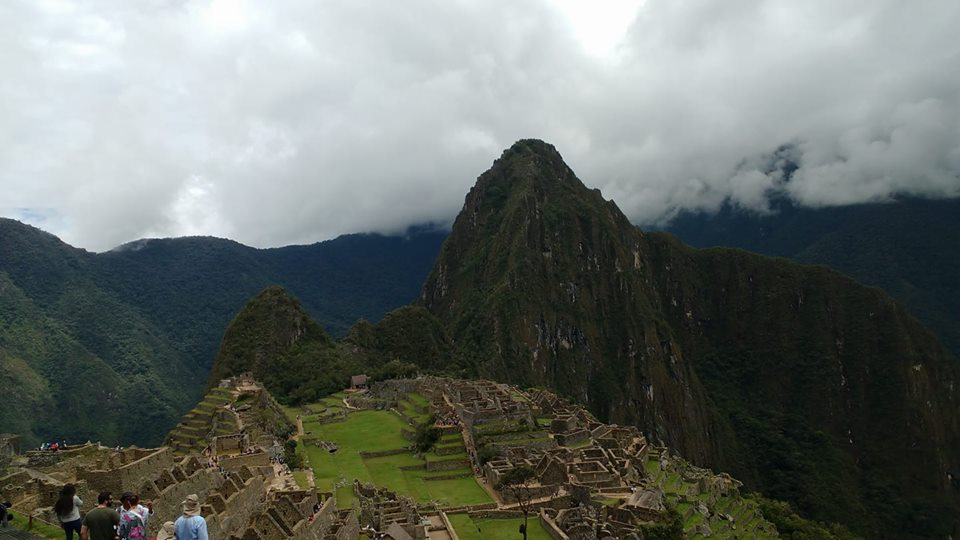
LIFE. “Like hundreds of visitors, I look out over the mighty ruin city of Machu Picchu in Peru. Below is the winding river Urubamba or Willcamayu, which in Quechua means ”the sun’s river”. I sigh with amazement, as do hundreds of hundreds of tourists every day, at the sight of these high mountains and the most famous creation of Inca culture.

Although it is not so easy to get here, the number of tourists increases every year. In an hour and a half, a bus takes us early in the morning from Cusco to Ollantaytambo, where a train awaits to take us to Aguas Calientes, a tourist town among green mountains. From there, a bus takes us along a winding mountain road 700 meters up to the Machu Pichu entrance.”

In October 1943, poet Pablo Neruda was said to have visited Machu Picchu. According to him, the visit came to be a magical revelation that transformed him as a human and as a poet. In 1945, he published one of his best-known poems, Alturas de Macchu Picchu (”Machu Picchu’s Heights”).

How could Pablo Neruda get to the city of Machu Picchu, is a question that is asked spontaneously? Luis Nieto Degregori, one of the more critical writers in Cusco, has researched the story Pablo Neruda’s visit to Machu Picchu. His father, Luis Nieto Miranda, met Neruda in Cusco in 1943.

In a 2004 chronicle entitled ”Neruda in Machu Picchu,” Luis Nieto Degregori claims that Neruda arrived in Cusco by train on the afternoon of October 26. With him was his wife Delia del Carril, the Peruvian writer Esteban Pavletich, as well as Uriel Garcia, writer and senator for Cusco.

Cusco, situated at 3,500 meters above sea level, was not the tourist Mecca of today. The city had only about 45,000 inhabitants, most of whom spoke Quechua that came to the Plaza de Armas chewing on coca leaves with their hats, colourful ponchos and llamas to sell agricultural products and handicrafts.

Cusco’s mayor appointed Neruda, the guest of honour in the city. During the visit, Neruda was hailed during a ceremony in Cusco’s theatre in the presence of representatives of cultural organisations, artists and workers from the area. Luis Nieto Miranda provided the welcome speech.

The Inca trail was an access road. Everyone who has passed it certifies that it is one of the most challenging paths on earth. The four-mile trail runs along steep mountain paths. The precolonial trail with high stone steps is maintained today by the guides. There are several archaeological centres and tunnels in the mountain. It takes four days and three nights to arrive, and you pass an altitude of 4,200 meters above sea level in cold air.

Neruda reads some of the poems. On All Saints’ Day, November 1, Neruda and his wife boarded the train to continue their journey to Chile. At the station, delegations from cultural organisations and trade unions dismissed them. Nieto Digregori claims that the local press did not inform about the poet’s visit to Machu Picchu. That trip must have taken place between Wednesday, October 27 and Saturday, October 30, 1943.

”On inaccessible paths and on ridge ridges, we came up to the lost city: Machu Picchu.” (Neruda, Condé Sur Iton, January 1972). “We got there on horseback. At that time, there was no road. From above, I could see the old stone buildings, surrounded by the high, green mountains of the Andes ”(Neruda, I confess I lived: memories, 1975).
Esteban Pavletich (1906-1981), a Peruvian writer, organised Neruda’s trip to Machu Picchu. Pavletich was 37 years old at this time and had the experience of climbing mountains after joining César Sandinos and Farabundo Martí’s guerrillas in Nicaragua in the late 1920s.

The mystery remains. How did Pablo Neruda come up to Machu Picchu? One way to get to Machu Picchu was via Aguas Calientes, where the train has been going since 1934. From there, the trip went up on foot or on horseback. That was probably the road Neruda took. But it was not until 1948 that the winding road from Aguas Calientes was opened up to Machu Picchu, the so-called Hiram Bingham’s road. And it was not until 1950 that Machu Picchu was opened to tourists.

The Inca trail was an access road. Everyone who has passed it certifies that it is one of the most challenging paths on earth. The four-mile trail runs along steep mountain paths. The precolonial trail with high stone steps is maintained today by the guides. There are several archaeological centres and tunnels in the mountain. It takes four days and three nights to arrive, and you pass an altitude of 4,200 meters above sea level in cold air.

This is heaven. Altitude sickness can cause headaches, dizziness, lack of appetite and difficulty sleeping and can have complicated consequences. You have to prepare physically, and it is important to drink a lot of tea of coca leaves. It is an adventurous route. The day we visited Machu Picchu it started to rain.

We took the bus down to Aguas Calientes, and before we drank a Pisco Sour, it started raining with lightning and thunderous thunder. From the terrace of the restaurant, we saw how American, German, Italian, French and Spanish tourists continued to pour into Machu Picchu. No one goes astray anymore; everyone is well informed with the help of map and GPS in their iPhones. All are equipped with rain cover, hat and boots.

The journey to Macchu Picchu is still an unpredictable adventure to this day, also for well-trained tourists who travel a safer route than the Inca Trail. Pablo Neruda was not an Indiana Jones. Neruda was an urban bohemian dandy. He wasn´t a rock climber.
Could Neruda really have made it to Machu Picchu during a four-day ride? I haven’t been able to confirm that.

PÉREZ SANTIAGO
info@opulens.se

Saludo de Patricio Manns